Showing posts with label education. Show all posts

Monday, February 28, 2011

Why I Stand with Wisconsin Workers


Since Madison, Wisconsin is burning as I blog, I must to take a moment to support teachers unions and unions in general. And I want to explain that support. Despite my own teaching and union/non-union experiences, I don't think I understood and appreciated the role of unions until just recently. These two pieces, one by award-winning Maryland social studies teacher blogger Kenneth Bernstein and the other by California English teacher blogger David Cohen, helped me to understand the importance of unions.

My parents and their parents before them, were not wealthy, but nor were they workers, unionized or otherwise (although my maternal grandfather's father was very active in the railroad telegraphers union in Illinois). My father's parents were the children of Eastern European immigrants and owned a stationary store in Brooklyn, New York. My maternal grandfather worked as a chemist for Montgomery Ward and then as a manager for an automotive parts company in Chicago, Illinois, and my maternal grandmother was a homemaker and worked as at the Hadley School for the Blind.

Besides being born white in America, my parents were lucky to have attended two of the best known public high schools in the country; my mother went to Glenbrook in Northbrook, Illinois, and my father to Stuyvesant in New York City. My mother had college-educated parents and the luck of her zipcode (though not if you ask her as she hated the suburbs) and my father had parents who, though relatively uneducated themselves, greatly valued education. My parents went on to attend outstanding public universities--my mother, the University of Wisconsin and my father, Brooklyn College. They met while they were in graduate school at the University of Michigan.

After finishing, they moved to Washington, DC, where my sister and I grew up and attended public schools, so that my father could take a job as a lawyer with the federal government, where he has spent most of his career--primarily as a civil rights lawyer at the Department of Health, Education, and Welfare and then as a litigator and energy efficiency regulation counsel at the Department of Energy. My mother had been a linguist but couldn't find a job in her field (her specialty was semitic languages--she was a generation early on that one).  After learning about my father's work at HEW and watching him in court, she went to law school and became a labor, civil rights and school finance lawyer. I imagine they could have gone to work for any white shoe law firm they wanted to, but they gladly chose civil and public service. While we weren't rich, we lived a comfortable middle class life.

Among other topics they discussed at the dinner table, I definitely recall my parents grumbling about corruption and obstructionism in unions, but they always believed in their importance. When I went to work for DCPS, I was ambivalent about joining the Washington Teachers' Union--I really didn't know much about unions. Despite some of her negative associations, my mother informed me I should join, that it was the right thing to do. Even then, I never developed union pride; for one, I certainly didn't enjoy funding WTU President Barbara Bullock's collection of fur coats and silver candlesticks.

I found my experiences with "management" much more pleasant and reasonable when I taught in public schools in Albemarle County, Virgina, a right-to-work state, but I don't think that had anything to do with not being unionized or not having collective bargaining power. And I did join the Albemarle Education Association chapter of the Virgina Education Association. I can't say they ever did anything directly for me, but nor did I have the need to ask them to. Many other teachers I've spoken to have described the organization as both toothless. I imagine they feel that way since teachers' salaries in Virginia are approximately five thousand dollars below market, being especially low where I live and have taught in Central Virginia. But at the very least, the VEA serves as a good resource for educators and lobbies to improve the working and learning conditions for teachers and students.

I always took for granted my middle class upbringing, which is becoming less and less possible, as middle class wages decrease and expenses increase. With all that's going on in Wisconsin, I have come to appreciate that my parents and I have been able to live a comfortable middle class life because of what labor unions fought for in the first place: fair compensation, safe working conditions, and a decent standard of living in exchange for a job done. Their fight increased wages and other forms of compensation, such as benefits and pensions, and improved working conditions for all of us.

That's why I attended the Rally to Preserve the American Dream in Richmond, Virginia, this past Saturday (pics thanks to Virginia Organizing  here) and that's why I will continue to fight for the working and middle classes and for the poor to get out of poverty. Does that mean I think that unions are uniformly or inherently "good"? No. Does that mean that I think that people who don't do their jobs should be able to keep them? No. But I don't have blind faith in the free market, either. Unions serve as a check on unfettered capitalism, and capitalism has certainly been recently unfettered. Unions are the only bulwark right now between fascist capitalism and regulated capitalism. Without the unions, we will have no middle or working class at all, only a few powerful rich and many, many poor.

The more progressive Democrats can't don't this alone, however. Traditionally more conservative members of the working and middle classes must stop voting against their own economic self-interest. Instead of asking "why should others get decent wages and healthcare insurance when we don't?" they need to fight for such basic themselves, like yes, Obamacare, and stop allowing themselves to be the lackeys of tax-dodging, overseas-job creating corporate interests who are doing nothing to advance working peoples' quality of life. Furthermore, while I have been heartened to see neo-liberals such as ObamaDuncan, and some DFER types speak out in support of the right to collective bargaining, they are in part culpable for the attacks on America's middle and working classes and their unions. Neo-liberals and centrist Democrats, their rich patrons, and their mouthpieces in the media have been busy embracing disastrous and crude education reform policies such as those of Michelle Rhee and thoughtlessly bashing teachers and their unions in the process. In doing so, they have weakened the Democratic party and middle and working classes as a whole, emboldening Republican leaders such as Scott Walker, Chris Christie, and Rick Scott and their oligarch overlords, with their ruthless free market ideology, to make a well-orchestrated and dangerous grab for power.

It's time for neo-liberals to do what's best for children and their families by changing course on their wrong-headed education policies. To do this, they must end their collaboration with corporate-sponsored union busters. You can't do what's best for our nation's children if you're crushing their parents and teachers in the process. If neo-liberals really want our children's futures to be bright, then they must fight for a quality of work and home life that will make that possible. Unions, for all of their imperfections, do that.

Friday, January 14, 2011

Publish or Perish


I got an essay accepted at truthout. Yay! I wrote about the Obamas' decisions regarding the education of their children and President Obama's statements about that decision in the context of his administration's education policies. (A recent excellent and comprehensive review of Obama's promises on education in contrast to his actual policies can be found here.)

"Mr. President, We Want Your Children's Education, Too" went through many, many drafts and I was very pleased when it was accepted by the first place I sent it. (An aside about the writing/publishing process: Almost all of my publications had been submitted to targeted publications I know well.) I submitted the piece back in November 2010, but the editor I corresponded with warned me it would be probably a while. It happened to come out on January 9, 2010. At first, I was ashamed of its publication date, given it was the day after the shootings in Arizona; it didn't seem to be an appropriate time to be so critical of the Obama administration.

But then I found out that Secretary of Education Arne Duncan was butting (yet, again) into D.C. Mayor Gray's DCPS Chancellor selection decision, urging him to permanently appoint Rhee right-hand woman and Interim Chancellor Kaya Henderson, of whom he's "huge fan," and in the process by-pass a 2007 DC law which requires a rigorous review process including consulting a panel of teachers, parents, and students. Duncan also dangled the possibility of taking back Race to the Top money the District was awarded if his wish were not granted.

Besides registering my disgust with Duncan's confirmation that Race to the Top is nothing but a bribery scheme, with his interference in local affairs, and with his spitting in the face of transparent and democratic governance, I'll repeat one of the same questions I asked in the essay: If Duncan and his boss are such "big fans" of the reforms and "progress" in D.C.P.S., why do they not send their own children to them?

To those who tell me to mind my own business: Point taken. I'd be happy to. Just as soon as Obama/Duncan change course on the policies that are undermining the quality of my children's education and just as soon as, of course, they mind their own business.


UPDATE 1/20/11: A reader was puzzled about this sentence from the truthout piece:
My DCPS past, warts and all, has made me a different person than I would have been had I gone to a place like Sidwell, different in a way that seems lesser to my current eye. 
Reading it out of the context of the rest of the piece, I can see that the sentence is confusing and needs a re-write. Given the stance that I took, most readers probably knew what I meant, but I hardly want to assume that readers "probably know what I mean." Rather, I want them to know what I mean because my writing is clear. I can't go back and fix it in truthout (and there was never an interaction with an editor about clarity or wording where this might have come up) but just to be clear, what I meant was that:
My DCPS past, warts and all, has made me a different person than I would have been had I gone to a place like Sidwell. Had I gone to a place like Sidwell I think I would have been different in a way that seems lesser to my current eye.
Readers, if you ever see something that gives you pause or puzzles you or that you think may be factually incorrect, even if it's a simple typo, by all means, let me know. I value your feedback and pushback.

Thursday, December 30, 2010

It's All About the Corporate Benjamins, Baby: Education, a.k.a., My 2010 Year in Review Post

(This has been cross-posted at All Things Education.)

During 2010, thanks to the work of Lawrence Lessig and Chris Hedges, I became much more aware of the unhealthy corporate influence in American democratic institutions. I put aside my creative writing to launch a series of posts on my more general blog on the topic. I wrote about corporate money in politics and government, after which I took a break to write about the VA-07 congressional electionwriting, and journalism, and to start a blog dedicated to education. I've intended to regularly update my food blog, as well, but the best laid plans. . .

Right before the Christmas holiday, I completed a piece about Teach For America, which I am hoping will be published somewhere bigger (not likely, I know). In the meantime, I was going to use winter break and the grandparental child care that comes with it to write, blog, publish, write, blog, publish. However, as I tried to organize my thinking about the present and future of journalism, of writing as a profession, of teaching as a profession, of public education, and of efforts to reform education, the topics all swirled together to form a toxic sludge of anxiety that, helped along by my kids' germs, rendered me existentially and then physically ill. As miserable as it was, being sick forced me to take a step back and ignore all of it for a number of days. From this pause grew a less fevered end-of-year collection of thoughts about the confluence of corporate influence and public education.

I am vulnerable to conspiracy theorizing about what's currently happening in the name of education reform, and I understand why others are, too--I think, in fact, that democracy benefits from this type of push back. Are the reforms of wealthy and politically connected individuals harmful to the institution of public education? I have said on my education blog and continue to say: yes, that in many cases they are. But are those folks sitting around together and villainously hatching some grand scheme to bring down public education? No, that's way too simplistic of an explanation for what's going on. Furthermore, I'm doubtful that describing problems with their efforts in terms of a conspiracy is productive. The problem with talking like a conspiracy theorist, even if there's at least some truth to what's being said, is that you're likely to be dismissed by the very people you need to be taken seriously by. In that vein, it is equally hysterical and irresponsible to cast teachers and teachers unions as the villainous "deep-pocketed" (ha!) root of all of our nation's problems or even as the root of our education system's problems, or as sitting around conspiring to ruin children's lives because they only care about the "adults." Unfortunately, these seem to be prevailing narratives these days.

Teachers' unions may defend some people who don't deserve defending and they may make mistakes, and yes, there are educators out there who aren't doing their jobs and yes, teachers need fair and rigorous evaluations, but as a group, teachers and their unions are not responsible for how our society has failed us over the past year. Did teachers unions cause twenty-seven plus percent of America's children to live in poverty? No. Have teachers and their unions driven up heath care costs? Do they deny coverage and care to our the most vulnerable among us? Nope. Did teachers and their unions cause our economic system to melt down? No, that was another group of professionals. Did teachers and their unions go start costly and futile wars in Iraq and Afghanistan? Did teachers and their unions create a criminal justice system that disproportionately and often unjustly imprisons poor people and minorities? No, they aren't behind such travesties. Did teachers and their unions fail to recognize the impending dangers of climate change and then sabotage legislation meant to lessen the havoc it's going to reap? No. It's not been teachers or their unions that have done all of these things, but our political leaders, policies, and system. And who is now clearly behind those? Not a bunch of middle class educators, but business, financial, industrial, and corporate interests.

While I don't believe that there is some evil master plan being hatched by the likes of DFER (Democrats for Education Reform), Bill Gates, Eli Broad, and the Waltons, their influence is unhealthy, undemocratic, and dangerous. Teachers unions and organizations like the National Education Association at least are accountable to the systems and large numbers of people they represent, systems and people whose work and studies will be most affected by the reforms being brought. Whom do DFER, Gates, Broad, and the Waltons represent? To whom are they accountable? Were they elected? Since when should a handful of unelected, extraordinarily wealthy people be entrusted to represent the interests of millions of poor, working, and middle class people?

Two of the most egregious examples of corporate influence in education are in higher education. As there is less public funding of public universities, wealthy patrons such as the Koch brothers are stepping in to establish "institutes" that put out research and teachings that serve not the interests of citizens, but the interests of the industries they own. In medical schools and schools of public health, much research on drugs and treatments traditionally funded by public monies is now funded and supervised by the very pharmaceutical companies who stand to reap profits from their successful trials.

In K-12 education, there are not as many cases of such overt conflicts of interest, but I'm afraid we're moving in that direction.  Gates, Broad, and the Waltons support market-based reforms that would include mayoral takeovers, vast expansion of charter schools (which are public schools that can be run in some instances as private institutions), the de-professionalization of teaching, and CEO-like leadership of schools and school systems, and they are pouring money into the system to see such reforms actualized. Influential organizations with deceptively neutral-sounding names such as right-wing ideologue Jeanne Allen's Center for Education Reform directly promote privatizing our public education system. As they already have in New York City Public Schools, test prep companies such as Kaplan (which is owned by the pro-corporate education reform Washington Post) stand to make millions from the new education reformers' policies which rely heavily on standardized tests.

As public schools are being told by Secretary of Education Arne Duncan to do "more with less" and as school budgets are being reduced and reduced and stimulus money runs out, with no enthusiasm for alternative means of raising revenues, the private sector is stepping to fill in the gaps often with strings attached, shaping our education system to their liking, whether its largesse benefits its supposed recipients or not. What's about to happen in Los Angeles Unified School District is only the tip of the iceberg.

An example of private takeover of public schools already in progress is in DC. The DC Public Education Fund is privately run on private donations with no public oversight, and very little of the money that's raised goes directly into the D.C. Public Schools' budget or is dispersed by those appointed to run the schools; yet, the fund directly influences outcomes in public schools. For example, the organization funded IMPACT, DC's controversial new evaluation system, teacher bonuses, as well as the infamous new contracts with teachers. During the negotiations, then-Chancellor Rhee stated that if she wasn't going to be around later, a.k.a., if Adrian Fenty didn't get re-elected, that the money raised for the teacher contracts would go, too. That is a clear example of private interests using private money to influence public elections and public policy. When public money is used to fund public schools, such blackmail can't take place, at least not legally. Much more democratic would be for the wealthy individuals who are behind such efforts to be taxed appropriately with the tax revenues funding social and educational programs vetted by democratically elected and appointed officials.

The Gates Foundation and the DC Public Education Fund have their hands in many places, and surely, not all of them are harmful to public education, but when I read Gates's thoughts and ideas about education, for example in these interviews about teaching in Parade and Newsweek, I'm horrified. (I'm also horrified about what such coverage means about the state of education journalism, but that's another story.) Not only has Gates not been elected or appointed by an elected official, he speaks simplistically and ignorantly about education even just at the level of basic facts, and his ideas have not been shown to work or improve the systems they impact.

While Eli Broad is no right-wing ideologue, his private education foundation and school leadership training centers have profound impacts on the public systems they're meant to reform. This New Yorker article about Eli Broad's influence in the Los Angeles art world is very instructive on Broad's approach to philanthropy. Broad has good intentions and interesting ideas, enlarging the arts scene in LA and making art exhibitions more accessible, for example. But he doesn't simply give money directly to art institutions or entrust the experts with funding; rather, he has to own and control the institutions, even if that means promoting poor practices or destroying the institutions. I can only imagine that a similar dynamic occurs in the Broads' education philanthropies.

If Gates, Broad, the Waltons, and the hedge funders behind DFER weren't rich, would they be listened to? Why are they being listened to now? Why are such a small group of extraordinarily wealthy individuals allowed to wield so much power and control over education policy? This is at the expense of democracy. Obama has rightly stated grave concerns with the Supreme Court's Citizens United ruling. Why is he not concerned with big money in our public education system? Why does he, in fact, welcome it? Is corporate influence any less problematic in the halls of our schools than it is in our halls of government?

One need not launch ad hominem attacks, speak of ethical dilemmas, or list the hypocrises of these education reformers. All Americans, regardless of political affiliation and educational ideology, can agree that our great nation was founded on the ideals of democracy. Corporate money and influence in our public democratic institutions, especially in our public schools, corrodes and corrupts our democracy. Anti-democratic forces are un-American. A healthy democracy requires a well and publicly financed, equitable public education system. Unfortunately, that's not what the Obama administration and the particular education reformers they throw their support behind are going to produce. Unchecked private and corporate influence in our public education system is as big a threat to our democracy as the unchecked corporate influence is in our political system. In fact, they are one in the same. Our public schools should no more belong to Gates, Broad, Bush, or any DFER member as they do to any taxpayer and any citizen; it is from them we must take our country, our democracy, and our schools back.


UPDATE 1/6/11: Too bad I didn't see this brilliant piece by writer Joanne Barkan before I posted this. I could have saved myself the trouble--it's a much better, more comprehensive piece on the problems with education philanthropy than anything I have ever written. Read it in Dissent Magazine or in truthout.

Tuesday, October 26, 2010

Check out my new education blog!

Hello loyal readers!

This is a quick note to let you know, in case you didn't already, that I have started a separate blog dedicated to education. It's called All Things Education, inspired by the name of the N.P.R. program All Things Considered, which reminds me of the show's theme song, which reminds me of my mother preparing dinner on weekday evenings, which I am doing as I type.

In any case, I have copied and pasted and accurately dated all of my education-related posts from this blog to that blog and have so far posted four new pieces, including An Introduction: "My New Education Blog!," "What I Read About About Waiting for Superman," "On the False Manifesto," and "Follow-Up to 'On the False Manifesto': What about RE:FORM SCHOOL?"

Please read and if you think it's worthwhile, subscribe and suggest to your education-interested friends, family, and co-workers.

Thanks for your support.

Monday, September 13, 2010

From NCLB to RaTTT


Just as I love Mondays, I love back-to-school time with its promise of a fresh start, return to structure and routine, and feeling of possibility. Come Wednesday, and February, I usually feel otherwise, but that's a different story. My family is personally having a great return to school, but back to school for me also means back to writing and thinking about education, and I continue to feel discouraged by Obama's education policies.

One of my least favorite of the current administration's initiatives in education is Race to the Top, for which
eighteen states and D.C. were named finalists. A few weeks ago, nine of those states (Hawaii, Rhode Island, Maryland, Massachusetts, Ohio, North Carolina, Georgia, New York, and Florida) and D.C. were awarded a total $3.4 billion. Under Bush, we got NCLB. (No Child Left Behind), which I liked to call No Child Left Untested. There were some positive things about NCLB, for example, it forced school systems to pay greater attention to the education of ELL (English Language Learner) and SpEd (Special Education) populations, and it forced educators to document and pay more attention to achievement gaps among different groups of students, sorted, for example, by race. However, NCLB caused standardized tests to become the centerpiece of the public school curriculum, with much less emphasis on critical and analytical thinking and writing, scientific inquiry, rich experiences with literature, arts education, physical education, and conflict resolution.

Now, we have Obama's Race to the Top, which I like to call Race to the Flop or
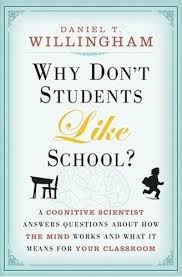
RaTTT. There are several education academics who don't like RaTTT, either. For example, Dan Willingham, University of Virginia cognitive psychologist and author of Why Don't Students Like School? says it's a doomed bribery scheme, not much of a change from NCLB, and that it's based on ideas that fail to take scientific evidence into account. In these two blog posts, UCLA education professor Mike Rose talks about the flaws of RaTTT as a policy: Part I and Part II. Secretary of Education Arne Duncan seems like a good guy and I think he means well, but according to this New Yorker profile his background in education before working for Chicago Public Schools consisted of helping out in his mom's after school program. Really? Does that qualify him to run a major public school system and then to be secretary of education? Oh, I forgot, according to the same profile, Duncan was a good basketball buddy of Obama's, and he has an MBA, so those must be his qualifications. Now, don't get me wrong, I like Obama. He's a good man and the best president we've had in a long time. But he doesn't know squat about public education and he's outsourced the top education job in his administration to someone who knows only a smidgen more than he does.

The criteria for winning RaTTT funding includes allowing school districts to take over failing schools, improving curriculum standards, encouraging school innovation (meaning lots more charter schools), and retaining the best teachers possible. I don't disagree with these goals, or with the "ends" of Race to the Top. Mostly what I disagree with is the how, the "means."


I think we should have national standards, but they need to be thoughtful and superior to what they'd be replacing. So far, I don't see much evidence of that. Dr. Willingham says that
the new standards are solid, but that they neglect to include the crucial step of how they will be achieved. In these other Washington Post blog posts (Part I and Part II), Willingham talks about what else is missing from national standards.

I am not anti-charter school. I think it's good to have some public school alternatives for students who aren't successful in more conventional public schools. I have considered sending my own children to charter schools (and would in the future), and I have considered teaching in them. I can understand why people would want to form them if they feel that they can't get a decent education at their neighborhood schools. But most charter schools can pick and choose their students and can expel them easily, and often families have to provide their own transportation. We should really focus on improving our neighborhood schools first and ensuring that all children have a reasonably close neighborhood school option first.


I don't disagree that the model of teacher seniority and permanent job security needs reform. I, too, think that teachers should be laid off when there are budget cuts based on quality rather than seniority. And teachers should be paid more and be provided with better working conditions. I also don't disagree that many of the current evaluation systems are seriously flawed. But on what basis should teacher salaries be raised, and how should we measure teacher effectiveness? On what basis do you decided quality?
Furthermore, how do you classify a failing school? The answer to this, according to Duncan and the architects and supporters of Race to the Top is: test scores, test scores, and test scores. Dr. Willingham says this is a terrible idea and I agree. Test scores mostly tell you about the students who are taking the tests, and not much about who is teaching them. When I taught in public schools, there were certain evaluation criteria that I didn't make, like high test scores, but there were other ways that my administrators had of observing and giving me credit for being a decent and hard working teacher. Now, it seems like some of the new evaluations, such as IMPACT in DCPS, proceed just as the previous instruments did in that they contain arbitrary and ridiculous criteria, such as putting standards up on the walls, but they don't give administrators some space to get beyond the superficial and arbitrary.

This article in the New York Times describes how RaTTT has interacted with the institution of teachers unions. After reading this, I kind of thought, well, maybe these "reformers" have something, maybe I'm just being obstinate in my thinking, maybe I just have a bad attitude. And, yes, I guess that teachers and their unions should join 'em if they can't beat 'em. If this is the way the ship is sailing, maybe educators should climb aboard and make the best of it rather than give up. Maybe they should take a deep breath and understand that this is just a passing fad, hang on to their principles and their concept of quality education until leadership with smarter and deeper thinking comes along and puts our education system on the right track. I'll just hope for that. I'll hope that soon we can get back to focusing on the art, science, craft, and trade of educating, to reforms of quality and substance, that we'll get out of Arne Duncan's RaTTT race, out of the rat race that I, for one, went into teaching to get away from. Let's just hope that Duncan and his groupies don't do irreversible harm before it's too late.

(photo by flickr user Kate's Photo Diary)

Wednesday, September 9, 2009

Obama's Controversial Speech to Schoolchildren that Wasn't


I am all hot and bothered over President Obama's speech to schoolchildren yesterday, September 8, 2009, and it's not because the (actually rather bland) speech turned me on. It's because of all of the dramatics surrounding the speech. I procrastinated writing this post, or producing any other type of writing I should have on my first full day of childcare, by picking debates on the topic with people on facebook.

I think we can all agree that the idea of Obama's addressing the nation's schoolchildren to stress the importance of education is a fine one. That he was going to "indoctrinate" the children or "brainwash" them with his "Socialist" (I wish!) agenda is laughable. And there is absolutely nothing in the content of the speech that is political or harmful. But by giving these right-wing extremist ravings coverage, the media was able to stoke the fires of polarization. Unfortunately many liberals took the bait, obscuring what were valid reasons for school districts to show the speech, but also valid reasons to opt not to.

The speech was a decent one with an admirable focus, but to ask the nation's educators to make time during the first day of school for this speech was asking too much. I know the first day in my classroom was always a very important one, one where I was worked damn hard to establish myself as a challenging teacher my students could trust and to establish my classroom as a safe and stimulating place. The last thing I would need on that day would be for some politician, even if I did vote for him and even if he were a Democrat, to be beamed in on the television pontificating in the same predictable educational-inspirational sloganese students hear all of the time and see plastered on the hallways of public schools: work hard and stay in school and achieve your dreams and don't talk back to your teachers. Then you can get accomplished, rich, and important like me and send your kids to private school so they can avoid being with riffraff such as yourselves (okay, that was cheap, that's his personal life, but wait, one-third of the speech was premised on his personal life, so perhaps the topic is fair game and I have to wonder if he nixed giving the speech in a D.C. public school because he imagined the irony of telling students to stay in a school he wouldn't send hs own daughters to). But back to the topic at hand. I have my own way of telling my students why my class is important and I don't need the President to do it for me. Furthermore, does he have any idea what it means for a principal to stop the school day and air a speech? How disruptive that could be? Obama says the most important thing in any student's education is the quality of the teacher they have, so I am perplexed by his beginning the school year by usurping those teachers' time and supposing that twenty minutes of his words would suffice to snap the nation's schoolchildren into shape.

I am glad that my own first graders weren't plopped down in front of a television the first day of school. They were busy enough keeping their teachers' names straight, avoiding getting lost on the way to the cafeteria, and remembering their bus numbers. Furthermore, I think the speech was fine for secondary students but I'm not sure it was appropriate for younger elementary school students, and I don't know what they would have gotten out of it. Hanover County, Virignia, Public Schools published this statement, which brought on accusations of being politically motivated and "anti-Obama." Maybe the school board is full of Republicans and maybe their statement was coded language for "we are not exposing this arugula-eating socialist to our students because he's going to brainwash them and we have a gubernatorial election coming up and don't want to give the Democratic candidate any kind of advantage," but I don't think so and even if that were the case, I still agreed with the spirit of the statement. (Hey, I wouldn't be above showing the Obama speech if I thought it would help defeat the rabid right-winger McDonnell.) I thought Hanover County's, and other school districts with a similar approach, handling of the situation was perfectly reasonable and appropriate: it may be disruptive on the first day and we don't want to pressure our teachers and principals; we are recording the speech, making instructional materials available, and letting the teachers decide when and how to show it. If teachers can prepare for showing and discussing the speech without having to also prepare for the beginning of school madness, then they can tie it to their curriculum and lesson plans, then actually the students would get more out of the speech than they would otherwise. I wish the Obama administration would have done the same thing and also consulted with educators to see what would be the most meaningful and least intrusive way to give the speech.

I appreciate him asking our nation's schoolchildren to work hard and to contribute to our society, and honestly, I would not have protested had it been aired in my kids' school and I might have shown it to my own students were I teaching right now, but it would have been better to do so in the context of a major historical event or the unveiling of education policy initiatives. How about promising to fix the problems of No Child Left Behind? I had plenty of E.S.O.L. (English for Speakers of other Languages) students who were told to work hard and stay in school and they did so until they figured out they had little chance of passing the standardized tests they needed to to get a high school degree and dropped out (speaking of which, was the speech made available in translation for E.S.O.L. students? In sign language for deaf students?) How about talking about pressuring our colleges and universities to make the college admissions process more equitable and not based on someone's ability to pay for SAT-prep classes? How about promising to de-emphasize high stakes testing and the low quality education that ensues because of it? How about talking about how our students perform and are employed relative to other industrialized countries? Obama doesn't have much new to offer about education policy: as I explained in my March 23, 2009 post, his administration's policies are rather more of the same of what we saw from Bush.

The speech had some inspiring moments and some nice rhetorical flourishes and I'm sure at least some students learned something from it. I liked what he had to say and reading over the speech before writing this blog piece, I liked it even more, but it's hard for me to get past the lofty empty cliches and the speech was nowhere as powerful as his masterful Philadelphia speech on race , his gracious presidential acceptance speech, or his rousing Inaugural speech. I hope his health care speech today is better. To me, the speech and the hoopla surrounding it amounted to much ado about, well, nothing significant, or as a friend of a facebook friend commented, "
to quote my daughter, 'Yeah...some guy talked to us on the tv about a bunch of boring stuff.' " With all of the test prep Secretary of Education Arne Duncan wants, aren't our nation's schoolchildren exposed to enough boring stuff already?


Wednesday, August 5, 2009

I agree with Diane Ravitch!


Wait a minute, did I just say I agreed with Diane Ravitch? When I was in Ed school ten plus years ago, I seem to recall associating her with Reagan education policy initiatives which I associate with eliminating the Department of Education which I associate with a slew of illogical conservative ideas. But maybe this is all getting mixed up together in a ed school associated readings-writings-research blur. The important thing is that I agree with so much of what Diane Ravitch is saying NOW about the current state of public education policy, particularly in this interview with John Merrow.

Obama's education policy ideas continue to disappoint me.

Thursday, June 4, 2009

A follow-up to my most recent post


One of the elements of Obama's education policy that I took issue with in my most recent blog post was tying teacher pay to student performance on standardized tests. I still think this is a bad idea! In that post, I cited University of Virginia cognitive psychologist Dan Willingham's video about the teaching of reading skills at the expense of content area-studies. Well, just recently Dan released a video about the unfairness of tying teacher pay to student test scores. It's worth a look: it's only three minutes and is much more concise than the arguments people like me go on and on making.


Enjoy!

Monday, March 23, 2009

What's Wrong with Obama's Approach to Education


In President Obama’s recent education speech, he proposed the creation of national standards, more accountability and merit-based pay for teachers, a longer school day, increased funding for special programs, and expansion of charter schools. He showed that he recognizes the vital role that education plays in a vibrant society and that he is serious about funding our schools. However, his ideas don’t reflect an understanding of the teaching and learning process at its best, or of how to build public institutions that would offer high-quality education.


Merit-based pay as well as the method for designating schools as failing or passing would most likely be based, as it has been since the enactment of No Child Left Behind (N.C.L.B.), on standardized tests. Obama’s policies as stated in his recent speech would continue the misuse of standardized tests that is already under way and reinforced by education “reformers” like Arne Duncan, our current Secretary of Education, and high-profile school chancellors (And, what, by the way, is up with this change in title? What happened to good old “superintendent”? Are we trying to emulate the British university system and its reinforcement of classism?) such as Joel Klein of the New York City Public Schools and Michelle Rhee of the D.C. Public Schools. Jeremy Miller’s account in the September 2008 edition of
Harper’s Magazine of his year as a Kaplan coach in New York Public Schools paints a depressing picture of how, under Klein's watch, millions of dollars each year are taken away from New York City Public School classrooms to line the pockets of test-prep companies like Kaplan (not to mention the time taken away from teachers to teach content) while students’ education suffers. Miller's story also caused me to wonder if there might be a connection between Joel Klein’s cultivation and close mentorship of Rhee and The Washington Post’s (which owns Kaplan) incessantly glowing reports of Rhee and decision to remove from their beat Metro desk education reporters too critical of her tenure. Might there be a lucrative contract in the future for Kaplan at D.C.P.S.? Perhaps not, but at the very best, the Post is guilty of lazy and sycophantic journalism, and of the same short-sighted thinking Obama is.

Standardized tests do serve some purposes: with other tools, they should be used to help diagnose a student’s current academic abilities, strengths, and weaknesses; to help inform teachers’ teaching of their students; and, yes, to help measure student progress. Standardized tests are a fact of life—for better or worse, they are not going away any time soon. Normally, those who score well on them are those who come from backgrounds of education, power, and affluence. To fail to prepare the children who do not come from similar backgrounds to take and score well on such tests would be doing them a disservice. That being said, the test itself should be one of many measures of a student’s progress, of a school’s quality, and of a teacher’s impact and effectiveness; the tests and their results should be a means to a quality education, and not the end. I do not want a doctor who was trained to score high on his medical board exams but who lacks hands-on medical experience or knowledge of how to work with patients; likewise, I do not want our nation’s children to finish school knowing how to take and score well on a test but without being practiced and versed in critical reading, thinking, and analysis; scientific research; creative composition and interpretation of art, music, and writing; mathematical problem solving; knowledge of geography and history and their patterns; active civic engagement, and making healthy choices. Very few standardized tests currently measure the type of knowledge I just described.

If Obama wants to treat teachers as the professionals they are, he should start with not simply dividing them into “good” and “bad.” Surely, an intellectual like President Obama can be more thoughtful. Teachers have areas of expertise and interests; they have strengths and weaknesses. Why not talk about a system that builds on teachers’ strengths and strives to resolve their weaknesses and that finds the best ways to put their interests and areas of expertise to use? Sure, there are some teachers we could call “good” and some we could call “bad” but such descriptors are not productive, nor do they do justice to the complexity of what leads a teacher to be successful or not. Moreover, most teachers didn’t start out being effective or ineffective; they started out being passionate but inexperienced. I wish Obama and his reformers would first conduct an examination of how public education systems work effectively and how they work deficiently and dysfunctionally, how they turn inspired teachers into “bad” and ineffective ones. How do under-performing systems make those teachers that way and how do more successful systems work to produce more effective teachers? Until we can answer those questions, we'll just fire “bad” teachers and replace them with those doomed to become the same.

Obama called for nationalizing standards and benchmarks. With input from educators across the country, this could be a good idea. Currently, standards across the country differ such that some states’ school systems make the grade where others don’t. Common standards might also keep each state from having to reinvent that wheel every few years, and increase mobility between states for teachers and students, including into out-of-state colleges and universities. Some decisions, though, about funding priorities or curricular content, for example, should be made locally; each state, county, and municipality comprises different cultures and serves different populations.

A longer school day could have a positive effect, but only if it includes enriching academic activities, outdoor education, the arts, sports, and some choice for students, and a isn’t longer simply to accommodate more dreary test-based math and reading drills, short-changing other forms of knowledge. According to University of Virginia cognitive psychologist Dan Willingham, time for reading skills is already taking over time for content-area studies and as he puts it in this short video, teaching content is teaching reading. Also, a longer day may be difficult for the youngest students for whom even six or seven hours of structured activities is already too long.

Talk of more funding for programs such as Head Start is encouraging; however, the spending need not stop with primary schools. Programs like Title I Reading, for example, are phased out by high school. Even students who score well on reading tests need help with how to read a biology textbook. Speaking of secondary schools, the high drop-out rate, which Obama is concerned about, increased when N.C.L.B. and its emphasis on high-stakes testing came to town, particularly among Latinos (whom he singled out by the venue of this speech) and English Language Learners, who struggle to pass the English-language-centered standardized tests needed to qualify for a high school diploma. A return to using those tests to diagnose and inform teaching, rather than to inform the curriculum and unfairly stigmatize, might encourage those in danger of dropping out to stay in.

Charter schools are desirable on a limited scale, but we need to strengthen and re-invest in our neighborhood schools first. As the number of charter schools increases, they begin to displace neighborhood schools, undermining the communities those schools help to facilitate. Obama commends charter schools for being labs of experimentation and progressive thinking. Why can’t we experiment and be progressive in neighborhood schools? In the Oakland Unified School District, where my two sons attend school, neighborhood schools must use the Open Court Reading Program even if educators at those schools haven’t found the program to be successful or effective. High-scoring schools, such as that of my sons, are allowed some space to be creative with such programs; they can use programs like Open Court as they should be used: as a tool to see where their readers are and to teach reading skills. When it comes to having a rich experience with literature, they are free to use more complex and complete reading materials, which Open Court does not offer. Schools with lower test scores, however, are forced to use Open Court in a rigidly scripted way and are not allowed to supplement with other more interesting books and authors. Charter schools, on the other hand, don’t have to use Open Court at all--they can choose the materials, pedagogical approaches, and curricula that they feel most suit the students they serve and most fit the mission of the school. Why not give neighborhood schools this same latitude?

Tying teacher pay to students’ performance, especially to standardized test scores, only sets up perverse incentives that don’t encourage teaching or learning. A study highlighted in the book Freakonomics by Stephen Dubner and Steven Levitt showed that bonuses tied to test scores resulted in high rates of cheating. How does Obama define “progress” and “failure” anyway? What is due to teacher’s failure and what is due to the circumstances of students’ lives and communities? Didn’t a focus on short-term incentives recently lead an entire sector of our economy to ignore long-term realities? Current standardized tests scores tell us mostly about the educational background and socio-economic status of students who are taking the tests; they tell us very little about how they’re being taught. Looking at the scores of students at Bell Multicultural High School in Washington, D.C. (where I taught), one would conclude that it was full of “bad” and lazy teachers. Not true. Never have I worked with such talented and hard-working teachers and we saw some amazing progress. For example, it wasn’t uncommon a ninth grader to arrive reading on a first-grade level and then finish the school year on a third-or fourth-grade level, but to be seen as making progress, the student had to score as proficient for an average ninth-grader. Merit-based pay will reward teachers whose students would score proficiently on the tests regardless of their teaching, and force those who don’t teach such students who focus relentlessly on test-prep at the expense of richer content. In 2008, the chancellor of the D.C. Public Schools, in a desperate attempt to raise test scores, called for the elimination of foreign language instruction for all ninth graders due to low language arts test scores. Why should under-performing students sacrifice foreign language education, the enrichment it brings, and skills they’ll need to survive in our global economy for further test prep? If their test scores did go up slightly at the expense of the quality of their education, who does that serve? Chancellors and politicians; certainly, not the students.

There are ways beyond merit-based pay to both support and reward quality teaching. Many education programs include only a few months of student teaching and pay next to nothing to cooperating teachers. Why not require a full year or two of student teaching, paying those student teachers a modest salary, like medical residencies do, while compensating their master teachers adequately? Next, why not improve working conditions? I heard once that teachers have one of the highest incidences of bladder infections because of insufficient bathroom breaks. This NEA article describes the particular health hazards teachers face. Reducing class sizes and teaching loads and increasing planning time would also make all teachers more effective and students more successful without needlessly resorting to a competition. Increasing staffing at schools of arts and physical education educators, reading and content-area specialists, school psychologists, social workers, counselors, and nutritionists would provide support for teachers and essential services for students. Finally, let’s simply raise salaries for ALL educators.

Obama seems to be listening to only one recent brand of education reformer. What happened to Linda Darling-Hammond, the Stanford professor who was the architect of Obama's education platform during the campaign, and her ideas? Education academic and former teacher Mike Rose describes in his blog how and why Darling-Hammond was passed over. Why doesn’t Obama examine the work of innovators John Dewey, the founder of the University of Chicago Laboratory Schools where his daughters attended, or examine the practices of the illustrious Sidwell Friends School, where his daughter are currently enrolled? Surely, the educational philosophy at those schools is not based around the contents and results of high-stakes tests. Why, then, should the education of nation’s public school children be so based?

The problems of our educations system are not as simple as parents, teachers, or schools failing their children and students. Of course, everyone who is a part of our education system should be held accountable, and of course, standardized tests play a role in that process, but we need policies that acknowledge the complexity of the teaching and learning process and that bring out the best in our teachers, students, and learning communities. Abandoning the neighborhood school, sacrificing rich and challenging curricula and education for higher test scores, and throwing merit-based pay at uninspired teachers will not achieve this; and, neither will reducing our teachers to “good” and “bad.”


(photo by flickr user edlabdesigner)